Friday, 15 April 2016

Spring Migrants arrive...

At last, a few spring migrants have started to arrive over the last couple of weeks including a few scarcer species. Dave Helliar came back from Australia and New Zealand just in time to start wrapping them up including this nice selection of goodies...

Hoopoe, Portland, Dorset: Dave Helliar
White Stork, Tealham Moor: Dave Helliar
Another frog bites the dust!
Pallas's Warbler...hanging on in there at Portesham.
Glossy Ibis, Meare Heath Lagoon: D. Helliar
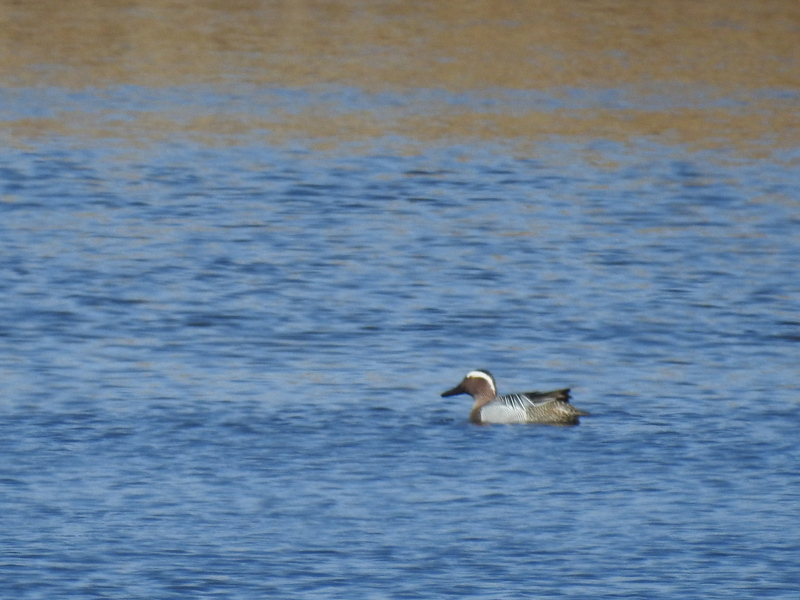
Garganey, Meare Heath Lagoon: .D. Helliar
The long-staying Glossy Ibis at Seaton Marsh
Dave Helliar
Little-ringed Plover nr Chard: D. Helliar
Many thanks to Dave for sharing his photos, a reminder that there have been some really nice birds around locally and hopefully many more to come.

Saturday, 9 April 2016

Adders on the Isle-of-Wight...

The I-O-W is definitely a good place for Adders Vipera berus. There's plenty of suitable habitat across the Island, especially along the southern coast and no sooner had we arrived last Friday than I stopped and found this lovely male basking near some gorse bushes. I'm incredibly pleased with the Nikon p900 as it allows for some great shots without having to disturb the snakes. These were taken from about 8 ft away:

Adder Vipera berus, male: R. Harris
Portrait of the above snake: R. Harris

Also had time for a little bit of rock-pooling with the kids and found this lovely Snake-locks Anemone Anemonia sulcata: 

Snake-locks Anemone (left) and Bead Anemone (top right)
And plentyful supplies of these colourful Turban-top Gibbula magus shells too:


Although I saw good numbers of Wall Lizards Podarcis muralis again this year, the temperatures were unseasonally cool and none except this little chap were basking.

Wall Lizard Podarcis muralis: R. Harris


Tuesday, 5 April 2016

Little Gull...

Our annual holiday to the Isle-of-Wight started last Friday and is very much dedicated to spending family time together. That said, I'm always on the lookout for wildlife, I just can't help myself! Yesterday we took Jacob and his cousin to the swimming pool in Ryde, a place where I traditionally get a bit of time to myself to check the beach front for Med gulls. There were three on the receding tide, including this distant 1st Winter bird.

1st Winter Mediterranean Gull, Ryde I-O-W
But the best was yet to come. The boating lake, which is right next to the swimming pool is always checked for Meds too, but a quick scan soon picked up a 1st Winter Little Gull, which was picking on the Black-headed Gulls and showing very well indeed - probably the best views I've ever had, as close as 10 ft at times!

1st Winter Little Gull: R. Harris

The light wasn't always great but it was so close I couldn't fail to take a few decent shots of it. Always lovely birds to see.

Today I had my first swallow of the year and I also added another adder to my holidays list plus a Sandwich Tern at Shanklin.

Tuesday, 29 March 2016

Spring Snowflake...


A couple of weeks back my brother and I went to see the Dorset Spring Snowflakes Leucojum vernum, at one of it's (presumed) native sites. Known from only two sites, the other in Somerset, these particular plants occupy a small, damp wooded area isolated by the surrounding agricultural land. The reason there is some doubt about their origin is the rather grand house and gardens situated half-a-mile away as the crow flies. But that said, the Dorset site is generally thought likely to be the most native population out of the two and the site certainly feels quite isolated as you approach. Whether it is or not, it's certainly beautiful and rare.
Spring Snowflake, Dorset: R. Harris
Characteristic single flower on each stem

Friday, 25 March 2016

Adders at last...

Almost two years to the day since I saw my last Common Adder Vipera berus, I finally got lucky today. They have become incredibly scarce and patchy in their distribution over the last two decades and while they are still fairly common in some of their historical strongholds (Mendip Hills, Forest-of-Dean, Quantock Hills etc.), elsewhere numbers have dropped dramatically due to a number of reasons. One of the main problems is fragmentation of habitat due to intensive farming methods and continued urban spread. Increase in recreational use of their key habitats by walkers, cyclists and horse riders as well as heathland fires, all add to the pressures. Adders are also still persecuted by misinformed individuals, despite being protected by law.

So seeing not one but two today in a very sunny Dorset with my brother Duncan (Twitter: @duncanharris5), was all the more exciting. The true value of the Bridge camera was also highlighted again today as we watched both individuals from 10ft away without the need to stop them basking. The first individual below is a recently emerged male and will become much greyer after its first slough. They won't feed until they have mated, usually in May or sometimes as late as June. Females emerge from hibernation a little later and should start appearing in the next few weeks.

Adder Vipera berus: Duncan Harris
Adder Vipera berus: Duncan Harris
Vipera berus, recently emerged male
flattening its body in the sun: R. Harris
Vipera berus, crop of the above. Note the black (not brown)
zig-zag markings and strongly contrasting
supralabials along the mouth-line. Grey colour
also showing on the head - all indications
that this is a male rather than a female : R. Harris
Vipera berus number two - a smaller male: R.Harris
We also found a single Sand Lizard Lacerta agilis, basking in the undergrowth.

Sand Lizard Lacerta agilis: R. Harris
Wood Ants Formica rufa out in force today too!
Earlier in the week I had my first Slow Worm Anguis fragilis of the year on the Blackdown Hills:

Slow Worm Anguis fragilis: R. Harris

Thursday, 24 March 2016

Great Grey Shrike...

Thanks to Aidan Gregory for sending me his photos of the recent Great Grey Shrike on the Quantock Hills here in Somerset and of the Pallas's Warbler at Portesham in Dorset. Super photos of two very nice birds:

Great Grey Shrike: Aidan Gregory
Pallas's Warbler, Portesham: Aidan Gregory
Bonus bird, a local Lesser Redpoll: Aidan Gregory

Thursday, 17 March 2016

Confined to Barracks...

When the weather is as good as it has been today and I find myself confined to the house with a heavy workload, it's just as well there's something to distract me in the garden. This morning the (presumably same) male Brambling made a return visit having been absent since 27 February. A welcome sight indeed. The Siskin numbers hit a high of 33 and have now settled back to a regular 18 each day and I've just had my first Green Woodpecker at Whitestaunton, new to the garden list.

Meanwhile the sheer volume of birds visiting the feeders seems to be eating us out of house and home. It's a constant job keeping everything topped-up but worth it just to hear the Siskins singing and calling just outside the back door all day long.

Dunnock: R. Harris
Blue Tit looking rather smart: R.\ Harris
Siskin, male: R. Harris
Goldfinch, R. Harris
Another Siskin, boy, do things pack away the
sunflower hearts!
Siskin, female: R. Harris
Song Thrush, don't get too many of
these in the garden.
At least it's nearly the weekend. Just hope this weather continues for a bit longer yet.

Tuesday, 15 March 2016

Portesham Pallas's...

Pallas's warblers are one of my favourite birds. I can vividly remember the first time I saw one, in the garden at Portland Bird Obs way back in the early 1980's. When you get a glimpse of the pale yellow rump and all the bars 'n stripes, it makes you gasp, they are such beautiful little birds. This little gem turned up a couple of weeks back but work commitments had stopped from going to see it until today. I've been hoping it would stay for a bit longer and I think just about every birder within a 50 mile radius had connected with it, except me.

So today I managed to take a few hours off work and after doing the school run I decided to take a chance and go for it. No news had been forthcoming today and only a single report yesterday had me wondering if it had started getting ready to disappear? But when I arrived there were three birders watching it and it showed very well indeed, down to 6 feet at times giving me some of the best views I've ever had. In typical fashion this bird is a little dynamo of energy, constantly on the move, hovering, chasing down insects to eat. I'd taken my old Digi SLR and 300mm lens as I knew there would be little hope of getting a pic with the bridge camera. Well, I got something...

Most of the time all I got was this...
But occasionally I managed to get the bird itself... 

Pallas's Warbler, Portesham, Dorset: R. Harris
Bit of rump, double wing-bar, crown and super...you get the drift
Pallas's Warbler, Portesham, Dorset: R. Harris

There've been some amazing photos of this bird and mine definitely aren't among them. I was going for the arty 'in situ' shot, so that worked. Now if I can just get my nose inside the room I can close the front door.

Friday, 26 February 2016

Cage Fighting...


Yesterday was the third day in a row that the beautiful male Brambling returned to the garden in Whitestaunton. I finally managed to grab some video of it late yesterday afternoon and added it to the clips I'd already taken of the Siskins and other birds visiting 'The Cage' over the last couple of days.  My father-in-law really should patent the idea. In a (successful) attempt to keep the Grey Squirrels, corvids and Wood Pigeons from decimating the bird food supplies, he constructed this huge cage around the bird table area of the patio and it works a treat. The smaller birds are able to get in and out through the tennis court netting and feel so safe inside that they don't even bother that much about the occasional cat or Sparrowhawk passing through!

It doesn't look elegant but the birds really love it, including the flock of 25 Siskin now fighting to feed on the sunflower hearts. It looks like the Brambling may have finally moved on though, no sign of him so far today.

'The Cage' - not pretty but effective.

And here's a short video highlighting the last couple of days activity...no sound on this one because it's all filmed from indoors. I took the background noise out as flushing toilets did nothing for the film.


Note: The Brambling appeared again late in the day on the 27th for what may have been it's last visit as it hasn't been seen since. Very nice while it lasted.

Brambling, male: R. Harris
Nuthatch: R. Harris
Siskin, male: R. Harris