Monday, 15 July 2019

Pacuare...and Agamis

We are about a week into our month-long filming trip and heading north to the Caribbean coast. The route will take us over the volcanic Talamanca mountains, over the Cerro de la Muerte (Hill of Death!), past the still active Turrialba Volcano into Cartago and then west past Limon to Matina.

At Matina we catch a pre-arranged boat for a 25 minute journey along well vegetated (and crocodile infested) waters to the Pacuare Reserve and Ecology Project situated in beautiful unspoilt jungle next to the Caribbean Sea. Upon arriving at the dock, we are met by a team of people pulling a large wooden cart and I was immediately struck that the whole scenario was not unlike a scene from LOST.

We transferred all of the baggage and equipment to the cart and walked the 300 meters to the station. The accommodation was rustic but comfortable. There's no electricity in the rooms but we are provided with solar bulbs, which we can charge during the day and run for about 12 hours.  They have a laboratory another 250 meters along a track where we can charge our camera batteries and a communal dining room. I have to say, all of the people working here were incredibly friendly and we soon felt right at home. The reason for visiting Pacaure was to film the largest (and most accessible) breeding colony of Agami Herons in the Americas and they also have nesting Leatherbacks, including a hatchery on the beach.

The reserve layout

The accommodation, complete with
colourful murals

Pacaure beach and the Caribbean Sea

The Caribbean Sea isn't the expected blue colour
here but a churning sandy brown.

Young Leatherbacks from a hatching nest
are gathered together for safe release

A couple of baby Leatherbacks making a bee-line for the sea

The next morning we head straight to the Agami colony and spend a couple of hours with them. I count 49 birds, mostly paired up but there are many more as the viewing area only shows a small sector of their breeding trees. They are a truly incredible site - a bird I have dreamed of seeing since learning we were coming here earlier this year. I'm not to be disappointed...


Agami's are like no other heron I've ever seen.
They're the most elegant and beautiful birds.
Their facial skin can change colour in a
matter of seconds. The bird with the red face
 (a female)changed to yellow a few minutes later.

And this is the red faced individual above as it starts
to turn yellow like its mate. It can flush back to red just as quickly
Agami on alert, we never saw a single bird
hunting while we were present. Apparently some birds
fall foul of the local Caiman so they possibly hunt elsewhere. 

Young male White-necked Jacobin
We also saw plenty of reptiles and amphibians at Pacuare too. 

Striped Basilisk Basilicus vittatus, male - shedding its skin

Central American Whiptail Holcosus festivus
These were very common along the path sides

Green Basilisk Basiliscus plumifrons
The endemic and very pretty Red-eyed Tree Frog Agalychnis callidryas

Red-eyed Tree Frog Agalychnis callidryas
Olive Long-snouted Tree Frog Scinax elaeochroa


White-lipped Mud Turtle

White-lipped Mud Turtle
White-lipped Mud Turtle with it's
distinctive plastron


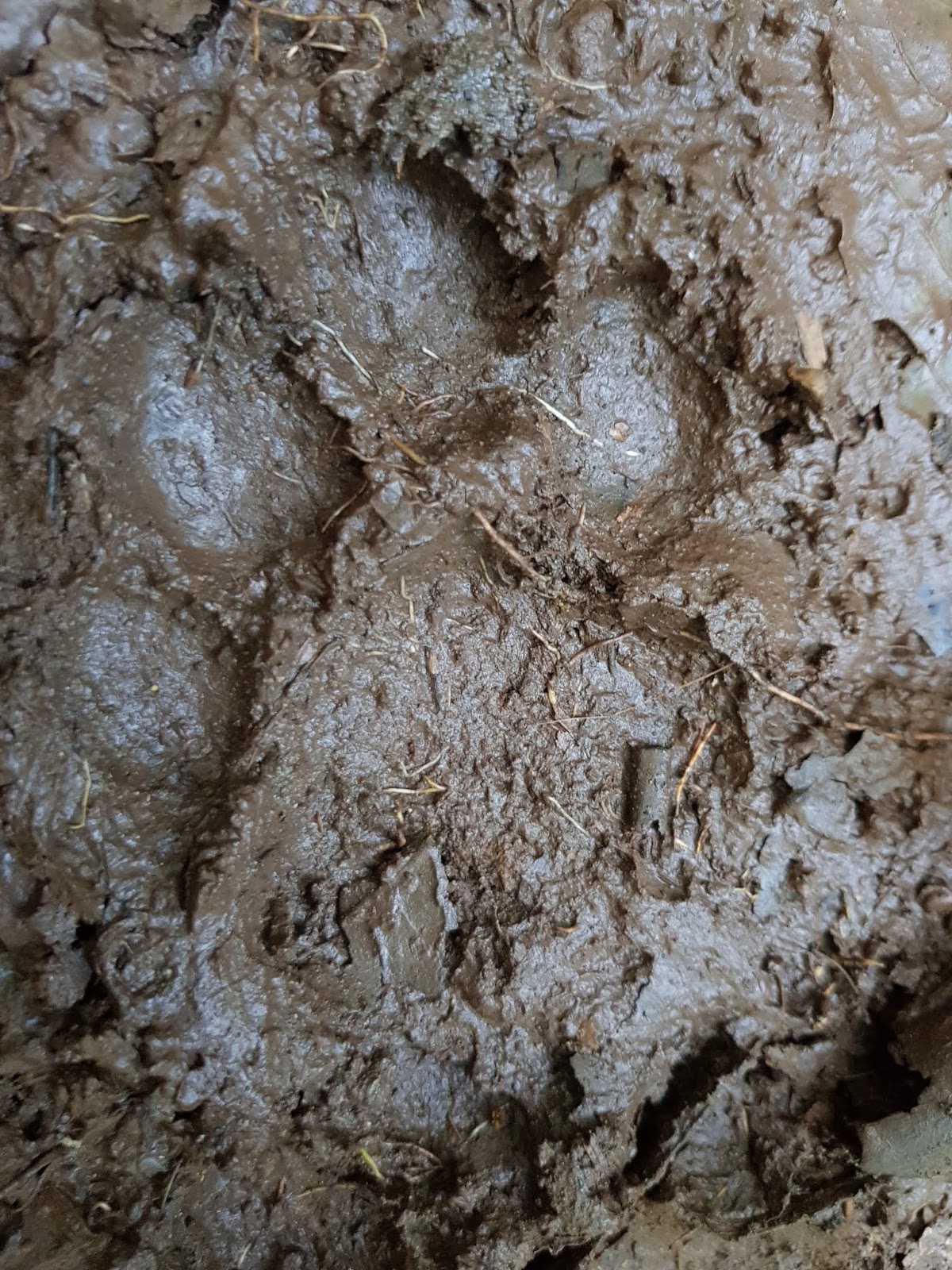
Fresh Jaguar pug mark

And good numbers of primates were seen as well. Howler monkeys aren't always easy to view as they sit high in the canopy but this small family group crossed the camp along the roof tops very close to us.

Howler Monkey, mother and young

Howler Monkey, male with his large vocal sac.

Our stay at Pacuare finally over, we set off for Rancho Naturalista. Renowned for it's hummingbirds I was looking forward to seeing another long-time dream bird...the Snowcap!


Sunday, 14 July 2019

Costa Rica...La Tarde and the Caribbean Coast

Before heading north to Pacuare Reserve on the Caribbean coast, we made an overnight stop at Ecoturistico La Tarde, a lodge around 40 minutes from Puerto Jiminez. The lodge is surrounded by pristine rainforest close to Corcovado National Park and is known for for its birds and reptiles.

Grey-capped Flycatcher - very common around the Lodge

Golden-hooded Tanager

King Vulture

Swallow-tailed Kite

Before nightfall we set about herping and filming in the jungle close to the lodge near a 600 year-old strangler fig, one of the most amazing trees I've ever seen. This would later be the location of our night scenes.


La Tardes

Strangler Fig - the backdrop for our night filming

Strangler Fig

Our herping guide, Cesar 'Dr Frog' Barrio Amorós

Cesar photographing a Golfo Dulce Poison Frog

Golfo Dulce Poison Frog - endemic to Costa Rica

The strangler fig at night, illuminated by our
filming lights, it was an incredible sight
The night's herping produced several good species, including this lovely Southern Bromeliad Boa Ungaliophis panamensis, a rare canopy dweller that is only occasionally found lower down and rarely observed.

Southern Bromeliad Boa

Southern Bromeliad Boa
Also a very large Eyelash Palm Pitviper. You can just about see the eye scales, which give this distinctive pitviper its name.

Me with a Eyelash Palm Pitviper Bothriechis schlegelii.
They come in a wide variety of colours, this one known 
as the 'Christmas tree'.

Eyelash Palm Pitviper  Bothriechis schlegelii 

Eyelash Palm Pitviper - 'Christmas tree' colour morph

Eyelash Palm Pitviper on the hook.
Cesar also found a nice Allen's Coral Snake Micrurus alleni on the lawn by the restaurant, a new one for all of us but, like most coral snakes, far too active to photograph.

The following morning we say our goodbye's and travel north on a long, hot, 8-hour drive which takes us over Costa Rica's central volcanic mountain range towards Pacuare Reserve on the Caribbean coast just north of Limon. Our staple for the journey...lychees. They are sold on street stands everywhere and make the perfect, refreshing snack, yum!

Road trip food - fresh lychees

Thursday, 11 July 2019

Costa Rica...in a nutshell!

I’ve just returned from a month long filming trip to Costa Rica with Nigel Marven Productions. Needless to say we saw a ton of wildlife and to be honest, I don’t know if I’m going to get time to produce my usual daily diary. There’s just too much to write about!

Instead I’ll attempt to give an overview of the areas visited to give a flavour of what we saw. To see the final version of the edited film, keep an eye out on Animal Planet and National Geographic when it launches next spring.

Osa Conservation, Osa peninsula.
We flew to San Jose via Madrid with BA and Iberia, arriving mid-afternoon. All was good until our names were called and we were summoned to the Iberia desk to be told ALL of our baggage (work and personal) had been left behind in Madrid! To be frank it was a massive inconvenience but it wasn’t a huge surprise, the connection time had been 45 minutes and we’d already discussed the possibility that the luggage hadn’t made it.

An unscheduled stopover commenced as we couldn’t risk taking the 8-hour drive to OSA Conservation just in case the equipment was held in Customs when it arrived the following day.

Next afternoon the flight arrived and we are at the airport Customs office to receive the cases, great!...No...The large tripod for the film camera was missing, which mean only hand-held shots could be taken until the tripod was reunited with us. A very apologetic Iberia promised to forward it to us so we finally left San Jose a day late and headed south.

Osa Conservation is a field station for biologists studying various aspects of the local faun. Many of those present are completing projects for their PHD's - one studying a rare poison dart frog, another studying the primates etc. We were there to film a mass breeding event of gliding frogs. Amplexus only occurs after the first heavy rains of the season. Despite spending 5 days here at 'the perfect time' we had no major rain and the event didn't occur. Blamed partly on it being El Niño year and partly on climate change, even the local biologist studying the breeding event was surprised that we had not witnessed the event during our time there. (*we have since learned that the event failed completely this year). Despite the lack of gliding frogs, we did see other wildlife.


White-winged Dove, San Jose

Yellow-throated Tucan, Osa Peninsula

Cherrie's Tanager, Osa Peninsula

Coati, Osa Conservation

Bare-throated Tiger Heron

Bare-throated Tiger Heron, sunning itself

Bare-throated Tiger Heron

Golden-naped Woodpecker, female

Turkey Vulture

Spiny-tailed Iguana, juvenile

Spiny-tailed Iguana, juvenile

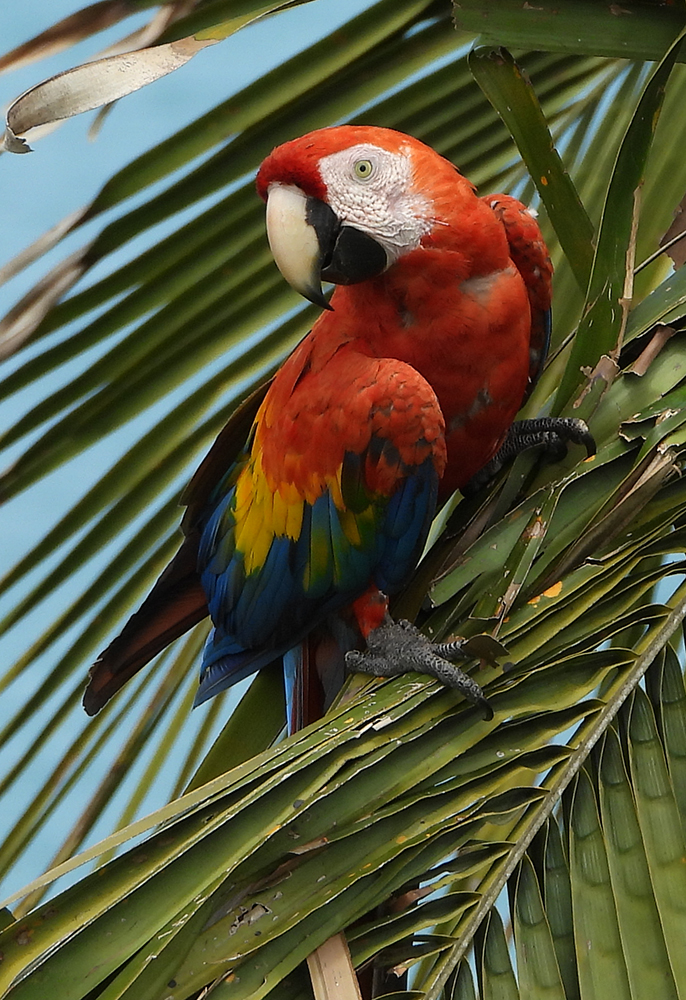
Scarlet Macaw

Scarlet Macaw

Red-legged Honeycreeper

Hourglass Frog

Wandering spider

Terciopelo - found on a herping night walk

A cryptic scorpion shows best under ultraviolet

An enormous Long-horn Beetle at Osa Conservarion


Golden Orb Spider as big as my hand!

Unbelievable that this stunning beach is completely empty!

Paradise
Before leaving the Osa Peninsula for good we headed an hour east to Puerto Jiminez, the main town in the region and access point to the Osa. We spent a day filming Spotted Dolphins in the Gulf of Dulce and the evening searching for yellow sea snakes. The latter proved elusive but the dolphins performed well.

During filming off Puerto Jiminez

Who's the strange guy with a beard?

Puerto Jiminez as sunset approaches

Puerto Jiminez at sunset

Brown Pelicans, Puerto Jiminez

Pantropical Spotted Dolphins, Gulf of Dulce

Pantropical Spotted Dolphins, Gulf of Dulce

Green Iguana, juvenile sunning itself on the dock at Puerto Jiminez

Magnificent Frigatebird


After finishing at Osa we left for the Caribbean coast but we spent a night at Las Tardes en route to look for snakes and that's where I'll be heading next...

PS. Our tripod caught up with us on day three of the trip, better late than never.