Local and worldwide wildlife adventures. Drone cameraman to TV's Nigel Marven. Dedicated Nikon user. Follow me on Twitter @chardbirder and Instagram: www.instagram.com/chardherper/. All images on this Blog are copyright of the Owner/contributors and cannot be used without written permission. All views expressed are my own. Translation to other languages available at the end of the page.
Trogon Lodge is a world away from some of the other places we had visited. It is VERY comfortable, it's situated high in the cloud forests...and it's bloody cold! It came as a shock to the system after two weeks of 30+ temperatures and 90% humidity to step out of our van into clear mountain air about 15 degrees cooler. It so cool in fact that the beds have duvets and you are given a hot water bottle every night! Not what most of us imagine Costa Rica to be like.
That said, it's a very welcome respite and there aren't any complaints from me. We unpack and head straight to the restaurant for the last sitting of the night. The food here is exquisite and we all savour the experience in front of a crackling log fire...surreal.
Everything is freshly made and tastes beautiful
Hmmmmmm...
Our time at Trogon was spent in the company of our bird guide Grevin (pronounced Graven), who is master at finding Resplendent Quetzals among the green foliage they like to sit in. Next morning though we are up bright and early and head up higher to the Paramo - a sub-alpine habitat covered in shrubs and home to a few unusual species.
Black-billed Nightingale Thrush before we leave the Lodge
Rufous-collared Sparrows are everywhere
and another...
It's a short 30 minute journey to our destination. One of the first birds we see is the scarce Volcano Junco followed shortly after by Volcano Hummingbird and then one of our filming targets, the Green Spiny Lizard Sceloporus malachiticus. It's frankly amazing that any reptile inhabits this cool/cold habitat but they are perfectly adapted to it.
Volcano Junco
Green Spiny Lizard, male
When the sun goes in they change colour
to almost black to conserve heat.
Some of the colourful flowers on the Paramo
The Paramo is rugged but beautiful
By lunchtime we had most of the footage we needed and moved on to a roadside cafe/restaurant another 40 minutes away where they feed the local hummingbirds and attract a large number of good birds to their garden. But not before Nigel posed for photos with some fans - he's very well known throughout the Americas.
Mountain Thrush
Slaty Flowerpiercer, male
Talamanca Hummingbird, female
Another Talamanca
Fiery-throated Hummingbird, male
We also added Large-footed Finch, Flame-coloured Tanager, Sooty Thrush and several other species to the list. After filming we headed back towards Trogon Lodge, stopping off on the way at a cafe where their garden birds regularly include Blue-throated Tucanets among others.
Blue-throated Tucanet
Blue-throated Tucanet
Blue-throated Tucanet
Acorn Woodpecker, male
Acorn Woodpecker
Flame-coloured Tanager, female
White-throated Mountain Gem, female
White-throated Mountain Gem, male
White-throated Mountain Gem, male
Volcano Hummingbird, female
Hairy Woodpecker
In the morning we would be going to look for Resplendent Quetzals, which meant getting up at 4:30 am, so it was an early night for all when we got back to the Lodge.
Our brief time at Rancho Naturalista over, we headed to our next filming location, Selva Verde Lodge in Sarapiqui. Selva Verde Lodge is another of Costa Rica's great eco lodges and we had a number of species to film here. The weather let us down a little...it was wet, very wet. Ok, it's technically the rainy season but it's been a particularly dry el niño year in Costa Rica and up until this point we hadn't encountered too much in the way of adverse conditions.
Most of our time at Selva Verde involved crossing the suspension bridge between the Lodge and pristine lowland jungle on the other side. It's not for the faint hearted or anyone with a fear of heights.
Selva suspension bridge
The far side of the bridge has a sliding locked gate to stop unauthorised access. As the guide unlocked it on the first day and slid the gate aside he said 'welcome to Jurassic Park', and he wasn't wrong - the exactly what it felt like. The guardian of this bridge was a 5 ft long adult Green Iguana, which remained perched on the top of vegetation for two solid days just basking.
Green Iguana Iguana iguana - it didn't move for two days.
Close-up of it's head.
It was a little damp...
Even our guide Ivan took shelter.
Check out the track conditions!
Waiting for the rain to stop...even the camera gets a brolly
Despite the weather, we did get some work done and we did see some birds...
Black-throated Trogon, female
A pair of Crested Owls
White-necked Manakin
Our guides were also into herping and found this beautiful Clouded Snail-eater (Sibon nebulatus). These snakes have specially adapted dentition evolved to extract snails from their shells. They are frequently encountered, especially after rain when snails and slugs come out to feed.
Clouded Snail-eater Sibon nebulatus
Clouded Snail-eater Sibon nebulatus
Clouded Snail-eater Sibon nebulatus
Can you spot this snake?
Right by the side of the track...
It sits perfectly still and relies on its cryptic colouration to avoid detection. In fact it had been sitting in this general location for about a week! It was a tiny Rainforest Hognose Pitviper Porthidium nasutum. This small pitviper is typically found in this habitat, wet lowland forests, where it will sit and wait for its primary prey - lizards. It's not really considered dangerous to humans and there have been no fatalities from this species. This individual was around 15 inches in length.
Rainforest Hognose Pitviper
Later that day our guides arrived with another great little snake - another snail eater in fact. This time a Bi-coloured Snaileater Dipsas bicolor*. Like Sibon nebulatus, this species is specially adapted to eating snails and slugs and are completely harmless to humans.
Dipsas bicolor
Other species of note included pure white tent-making bats, these large green Cicadas a several brightly coloured frogs.
This Cicada was about 2 inches long.
The famous 'Blue-Jean' Poison Dart Frog
also called the Strawberry Poisson Dart Frog
Red-eyed Tree Frogs
Both sexes have brilliant blue and white
striped sides but males are noticeably smaller
An enormous hawkmoth species spotted by Nigel
It had a wingspan of around 5 inches!
We were lucky enough to see another lovely hawkmoth Hemeroplanes triptolemus, a species known for its unique larval stage where the caterpillar imitates a snake to protect itself against predators - do Google it!
Hemeroplanes triptolemus in the restaurant
We also saw lots of Bullet Ants. These are one of the largest ant species in the world at 1.2 inches long! Their sting is incredibly painful and commonly results in up to 24 hours of agony, which frequently also leads to blood in the victims faeces. A scientist once described the sting of the Bullet Ant as being 'a pure intense pain, like walking across burning hot coals with a 3 inch nail stuck in your foot'. Needless to say none of us wanted to get stung by one of these. Luckily they are only aggressive if the nest is disturbed. This one was just out for a stroll.
Hard to see from the video but this ant is over an inch long.
Next up...we were in for something different...Trogon Lodge.
*Dipsas bicolor is considered by some to be a single species Dipsas articulata but the jury is still out on that one so for now it is listed here as bicolor.
Rancho Naturalista is another amazing eco lodge. It's situated about 60 km ESE of San Jose and is owned and run by Lisa Erb, a native of California who relocated with her family over 20 years ago. It's a premier birding lodge with over 450 species recorded, superb food and views across to the smoking Turrialba volcano when the clouds allow.
We were here to film hummingbirds. They have a great selection of species, the highlight of which is undoubtedly the Snowcap, a small, active, scarce and beautiful species (that I never did get a proper photo of, as they are always on the move). In fact it even features on Rancho Naturalista's logo.
I did get some of the other birds venturing into their garden though.
Brown Jay
Brown Violetear
Green-breasted Mango, female
Crowned Woodnymph - always sat in cover.
Snowcap, male - the only image I managed to get!
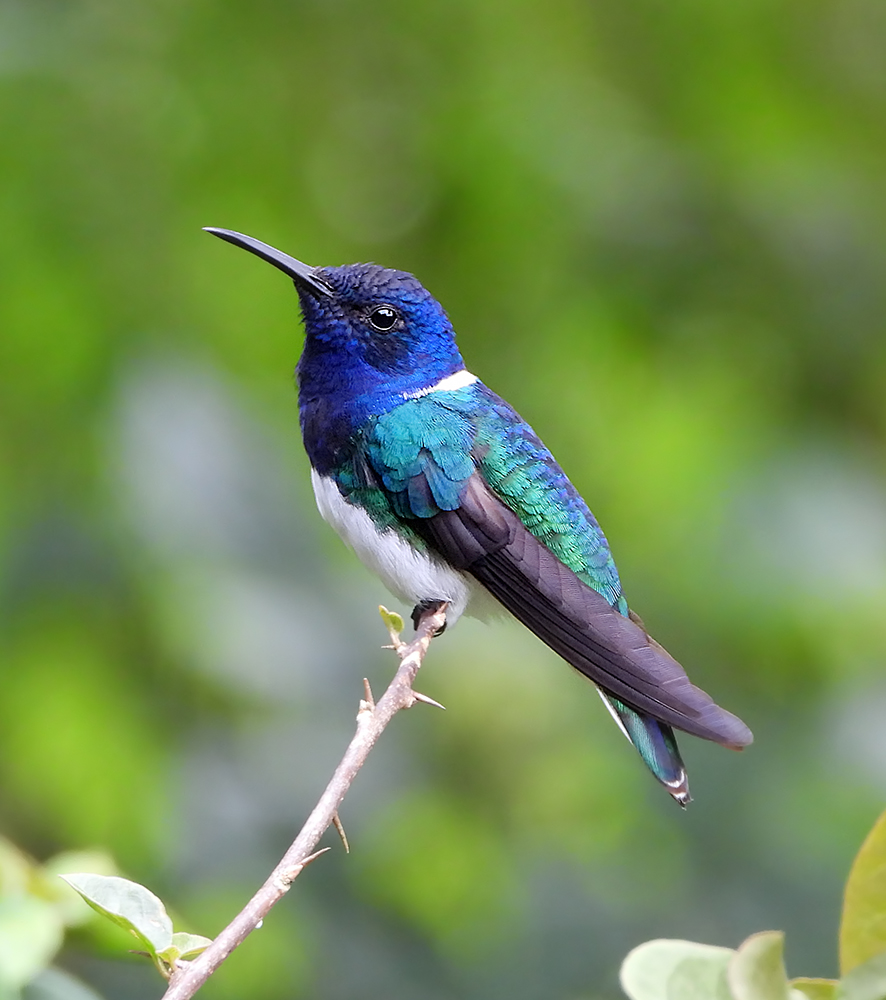
White-necked Jacobin, male
White-necked Jacobin, male
Collared Aracari
Collared Aracari
Keel-billed Toucan
Turrialba, one of the most active volcanoes in Costa Rica
A few minutes back down the hill from the ranch was a great spot to see Sun Bittern and a few other species.
Sun Bittern
Social Flycatcher
Southern Rough-winged Swallow
Yellow-throated Euphonia, male
This was one of my favourite locations and we also added Violet Saberwing, Stripe-throated Hermit and the very beautiful Green Thorntail hummingbirds to the growing list.